Showing posts with label Opinion. Show all posts

3 July 2012

Oz shopping premium?


I’ve written before about some of the ridiculous price mark-ups in Australia compared to the rest of the world. With the internet we can easily discover pricing of products overseas, and many of us are voting with our wallets and purchasing items from overseas etailers.

I think it’s fair to say that if an item cost the same in Australia and overseas we'll buy it from an Australian retailer, but the reality is that most products cost more in Australia than overseas. Part of it is due to the relative lack of competition. I read a report comparing Australia retailers’ margins with their global peers and Australian margins are consistently higher in all categories (e.g. consumer electronics ~3% globally, ~6% Australia, department stores ~5% globally, close to 10% in Australia).

However there are other factors at play:
  • Globally speaking, Australia is a small market. Our retailers, as powerful as they may be here, do not have the same scale as their overseas counterparts, so they are unlikely to get the same wholesale pricing or delivery costs as their peers in the US or Europe.
  • The Australian dollar is at an historical high making prices on overseas websites very attractive. If the Aussie exchange rate against the US dollar drops back to its 2007 level ($0.84) or to its 2002 level ($0.54!!) the picture will be very different.
  • Retail employment and real estate costs are much higher in Australia compared to the US, and probably some European countries.
  • Overseas brands are used to the high margins they earned in Australia when us shoppers have no alternatives, and unless retailing tanks in Australia in a big way, they’re unlikely to give up the “fat”.
With all that in mind, are we going to accept as a premium to buy from Australian retailers?

The retailers take on the exchange rate risk – they may not pass on the savings when their purchasing cost decreases due to a strong Aussie dollar, but by the same token they’ll absorb (to an extent) the extra costs when the Aussie dollar falls, and I think it should be reflected in their pricing.

And of course there are benefits from buying Oz. Buying from a brick-and-mortar store means we can test out/try on the product in person, which will always be better than browsing the item on a computer/smartphone screen. And instant gratification is worth something.

Even if we are purchasing from an Australian etailer, it is often easier to return an unwanted or unsuitable item.

Lastly, buying something in Australia means the money stays in Australia. It may be paying an SA’s wage (many of us either work in retail or have done so in the past, e.g. during uni), supporting a small business, or contributing in a small way to our super funds by increasing the retailer’s profit and dividend payment.

I think I'm comfortable with up to a 30% "premium" and will probably tolerate up to 50%. The actual dollar amount difference will play a part as well. Once the difference reaches $50 I'll be more inclined to buy overseas.

How about you? What do you think is a fair "Oz premium"?

10 April 2012

The great cosmetics ripoff

When it comes to discrepancy between Australian and international prices, make up must be close to, if not at, the top of the list. For instance, a MAC lipstick is $US17 in the US and $A35 here, and Stila's natural finish oil-free makeup costs $US38 compared to $A80 at Mecca.

It's actually worse with pharmacy brands. For instance, Revlon has just released the popular Colorburst lip butter in Australia. It costs $US6.49 at US Target. And how much is the RRP in Australia? $A21.95.


Why is that the case? I can (almost) understand markups of up to 100% - a few years ago $A1 was only worth fifty US cents. [ETA: And good point made by @horrypop on Twitter that US minimum wage ($US7.25) is much lower than Australian minimum wage (around $15)]. But paying 3.5 times for a brand new product when the Aussie dollar is stronger than the US dollar? It doesn't make any sense. I cannot justify paying such an exorbitant price out of principle.

So what's a girl to do? Head to eBay, that's what.

There are many sellers from the US that offer the lipsticks around $13-15 including postage. The sellers make a decent profit even if they purchase the lipsticks at US RRP, and we can get our hands on them at almost 50% off the Australian RRP.

So I'm going to test out the colours at Priceline or Chemist Warehouse and buy them online. I know I'm not the only one. I hope Revlon, L'Oreal, Max Factor and the like realise that we are not fools and know when we're being ripped off, and that price gouging is not a good strategy in the long run.

I rarely buy makeup in Australia anymore. I stock up when I'm overseas or purchase online from places like ASOS (interestingly I've never purchased from StrawberryNet!). How about you? Are you directing more of your makeup purchases online? Will you try a product at a pharmacy or makeup counter then purchase online?

P.S. Priceline is having a "buy one get one free" offer on Revlon lip and nail range from Thursday so I may head there on Thursday morning to have a look. Just goes to show that Revlon and Priceline can sell the product at $11.

8 April 2012

The dark side of online shopping

Photo: Amazon
I came across a article on the Sydney Morning Herald website about the working conditions of warehouse workers at the major online retailers in the US like Amazon. It refers to Mac McClelland, a US journalist who did s stint at one of the warehouses. The experience is fascinating, and also a bit disconcerting.

The advice Mac received before she started was to "leave your pride and your personal life at the door", not what you expect from a job moving things up from shelves to the conveyor belt.

The environment is intense. Workers are not allowed to miss any shifts in the first week, otherwise they're fired. One guy had to miss a day because his wife gave birth - there was no exception and he had to apply with the temp agency again.

After the first week, lateness and absence lead to penalty points (e.g. 1 minute late = 0.5 points, 1 day absence = 1.5 points). One you get 6 points you're out the door.

The time to perform each job is tracked and compared against a target that does not allow for error or rest. The packers work 10-hour shifts and are expected to walk up to 20km per shift. They have two 15-minute breaks and a half-hour lunch break ("Lunch is 29 minutes and 59 seconds—we've been reminded of this: "Lunch is not 30 minutes and 1 second"—that's a penalty-point-earning offense").

Pay is minimal (less than $US12 per hour) and because they're temp jobs there is no job security even if you work at the same place for years. Injury is a regular occurrence. The reward for meeting your target is new, tougher targets.

One line in the article stuck in my mind:
We cannot move at a "comfortable pace," because if we are comfortable, we will never make our numbers, and customers are not willing to wait.
Are we, as customers, that demanding? I think not. It all comes down to money. Using lowly paid, easily replaceable labour to work at a frantic pace reduce the etailer's costs, so they can offer us lower prices/make more money.

This reminds me of factory life during the Industrial Revolution. And that makes me sad.

You can read McClelland's full article here.

26 March 2012

What are your fashion price limits?


With so many things available online, it's useful to have some parameters to narrow down the number of item you have to sift through. Price is an obvious candidate. Thanks to the "sort by price" function available at many online stores you can start low (kinda like going through the bargain bin) and stop browsing before it hurts the wallet too much.

So at what point do you stop?

Obviously it depends on the category (clothes vs jewellery vs shoes vs bags etc), whether you're shopping for a specific occasion or just browsing, and which etailer you're visiting, but I'm assuming most of you have a few internal limits to guide you.

To me there are two types of limits:

(1) The "bargain" limit - an item below this limit is considered a bargain, so it's an easy decision to hit "add to cart" if you find something you like.

(2) The "proper" limit - it is sensible to spend up to this limit for an item, you'll only venture above this limit for something really special.

For instance, for costume jewellery (which to me means "earrings") my "bargain" limit is $20 and my "sensible" limit is probably at the $60 mark. With so many nice earrings on Etsy it is easy to find something below my "proper" limit.

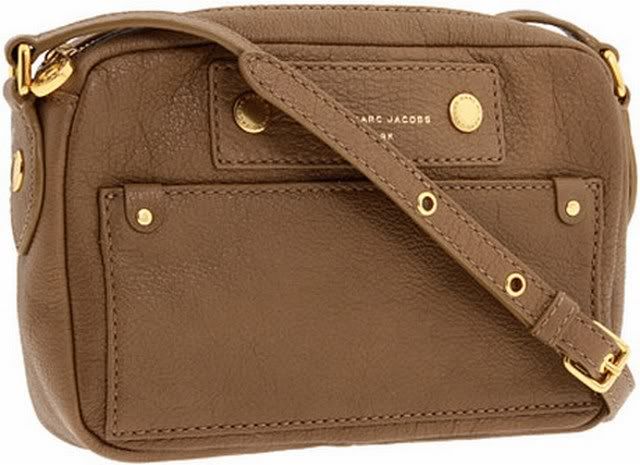
With handbags, I only buy leather bags and I prefer international designer brands, so the limits are higher. I'd say my "bargain" limit is $200, so the MBMJ preppy camera bag I bought in February is well under.


My "proper" budget is $1,000. Which I've crossed 3 times - once for a Chloe Bay bag I bought at Nordstrom when I was in the US, once for a red LV Speedy, and once for this Miu Miu Vitello Lux.


I love the look of this new Miu Miu bag but it's $A1530 so it's way above the limit.


I can go on and on but you get my drift.
Do you set any price limits when you browse? Or do you throw caution to the wind?

22 March 2012

The art of pricing


In the last few months I've noticed an increase in the number of storewide sales. There was the 50% off sale at Oroton last weekend (surely the stores are going to be empty this week!). Mimco has 20% off storewide (although I'm not going there any time soon) and Cotton On Kids has 30% off etc.

For retailers, storewide sales are great for foot traffic and short term sales spikes, but they also send a message to customers that their stock are not worth paying full price for.

Brands like Witchery and Leona Edmiston have had so many storewide sales in the last year I won't  pay full price at either stores. In fact I wonder how much stock they sell at RRP? If the figure is low enough because people only buy when they go on sale, will it be better for them to move their RRP down so they don't have to discount so often?

I'd rather shop from a brand that sets lower prices and goes on sale only at the end of season, so I don't have to worry that something I purchase at RRP will be on sale the next day or the next week. It also makes the store (even if only slightly) more competitive against overseas online stores.

It probably won't happen though, because:

(a) There are probably more people who are willing to pay full price than I think, e.g. fangirls, or time poor people who only shop once in a while;

(b) Retailer profit margins are already hurting because of the discounting so it's a hard decision for them to lower their standard prices, especially as there is no guarantee that people will buy more;

(c) Some shoppers are super-focussed on sales. They will happily pay for something with a RRP of $100 at 30% off ("What a bargain!") but won't buy the same item with a RRP of $70.

Do you love picking things up on sale? Or do you prefer cheaper everyday prices with less sales?

20 March 2012

A quick note to Mimco


Dear Mimco management

I visited one of your stores around 1pm to pick up a present for a friend. I knew what I wanted to buy so I was hoping for a quick in-and-out. There were two staff at the store, but despite up to 4 customers waiting to be served at the cashier, one staff was unpacking new stock instead.

May I suggest that lunch time is not a good time to unpack stock:
  • all staff should be serving customers during the busiest time of the day for the store
  • the unpacked stock was overtaking the tabletop so people can't see what jewellery on display underneath the glass
The SA behind the counter was pleasant enough, but I was not interested in her numerous comments on computer issues, I just want to pay and leave.

The retail trade is doing it tough at the moment, so retailers should be doing everything they can to entice new customer and hold on to existing ones. I am not a regular shopper at your store, and my experience today gave me no reason to come back.

Kind regards
Queen V

22 February 2012

Model vs mannequin?

I was going to write an Etailers Don't post about e-stores that only have one photo per product but I didn't have much to say beyond "it's not good enough". As I went through different websites for research I thought about how etailers decide to display their goods on sale. When it comes to fashion there are three options - use a model, dress up a mannequin, or create an "invisible mannequin" effect.

Before I compare the three options, I find the method used in creating an "invisible mannequin" pretty interesting. I thought they use some kind of wire frame to prop up the outfit, but instead it's done using a mannequin and some photoshopping.

As expected, they take a photo of the outfit on the mannequin, but what I didn't expect is that they also take a photo with the mannequin wearing the outfit back to front and inside out.

Photo credit: Chris Brock Photography
By photoshopping the two images together and removing the mannequin from the image you get this.

Photo credit: Chris Brock Photography
Pretty nifty isn't it?

Now back on topic. I'm going to use Diane von Furstenburg and her iconic wrap dresses to compare the three display options. First, the model. This is from the DvF website. Pretty simple, the model is doing her best impression of a mannequin.


Or the model can strike a pose or two.

From Shopbop


And from Bloomingdale's


The dress can also be part of a "look" (from Shopbop)


Some etailers use models but "chop off" the model's head to focus on the item on display (from Net-a-Porter).


Next up is the headless mannequin (from Zoe)


It's also favoured by The Outnet


The mannequin can be suitably accessorised too.


Last but not least, some choose to let the clothes do all the talking.

From Net-a-Porter


And The Outnet


So which method is the best? From a customer point of view it's nicest to see the outfit on a model, but it is the most costly option for the etailer (mannequin don't need make up, or payment for their service). The etailers save on makeup and hair when they opt for "headless models" shots, but I find it a bit strange to not see the face of the model.

The headless mannequins are somewhat creepy but if suitably accessories it can still create an interesting look. A skin-toned colour mannequin is much better than a grey one IMO - the latter looks too ghostly!

The "invisible mannequin" is the cleanest look as there is nothing else to distract your attention from the item on display, but somehow it leaves me a bit cold.

From an etailer's perspective, the biggest question is: Which method is most likely to make you buy the item on display?

Personally speaking, I don't think it matters. Despite my opinions above, if I like the item I'll get it regardless of how it is displayed. Well, that is my consciousness speaking. I don't know if a model is likely to subconsciously make me more likely to buy something.

Are you more likely to shop from websites that use models? Or do you favour the "invisible mannequin" look?


  • Models
  • Mannequins
  • "Invisible mannequins"
  • Doesn't matter
  •  


P.S. I really want a DvF dress now ...

1 February 2012

The lure of free shipping


I read an article on online shopping with an observation that people are irrationally influenced by delivery charges, that we respond to delivery charges more than the cost of total purchase. A survey by Deliotte last year on Christmas shopping showed that 7 out of 10 shoppers are more likely to shop from sites that offer free shipping.

I don't know about you but it's certainly true in my books. Last month I had 2 shopping carts with goodies, one with ASOS and one with Dorothy Perkins. I went ahead with ASOS partly because they don't charge postage. And Dorothy Perkins' delivery charge is £10.50 which is pretty reasonable for shipping from the UK.

Why do we get so hung up on postage? In most cases it's only a small percentage of the total bill. I think it's because we categorise the expenses into different buckets. The cost of the items we're buying give us something tangible. The shipping charge, on the other hand, feels like a surcharge on internet shopping. That's espeically true in the case of "click-and-mortar" retailers - if I can walk into the store and buy the item, why should I pay extra to get the same item from their online store?

Of course, that way of thinking doesn't factor in the time and effort required at our end. If the store is 20 minutes away from home, it'll take around an hour to get there, find and pay for the item, and go home. Typical delivery charge for an Australian retailer is around the $10. Is one hour of our time worth $10?

I think retailers do a similar type of cost categorisation too. After all, we're not charged extra for the rent of the shop, the wages of the SA's working at the store, or the cost of delivering the items from the warehouse to the store. These costs are built into the price. So why not do the same thing with postage? I suspect it's because most Australian click-and-mortar retailers are still relatively new to etailing and treat online sales differently from store sales. Because delivery is a new type of expense for them, and can be attributed to individual shoppers, at this stage they're charging extra for the service. I believe that in time, as the share of online sales increases and competition heats up, more etailers will realise the free shipping attract more sales and will absorb the delivery charge.

Some etailers go part way and offer free shipping for purchases over a certain amount. It stops people from placing small orders where the margins do not cover the cost of postage. It also has the added bonus of making people buy more in order to reach the threshold (I've done it many times myself).

I don't mind that approach as long as the threshold is reasonable. As a rule of thumb, fashion etailers should set a threshold no higher than the average price of a dress at full price. Feel free to quote me :-)

So what's your view on shipping charges? Do you only shop at etailers with free shipping? What is the most you've paid for delivery charges (mine was around $40 from The Outnet's US website and Nordstrom, I can only justify it because the discount I received is greater than the postage).

23 January 2012

Why we love internet shopping part 1


We know from news reports, from talking to family and friends, and from our own shopping patterns, that etailers are taking more and more business away from brick and mortar stores.

What makes online shopping such a compelling proposition?

If you listen to the likes of Gerry Harvey, it's all about the price. It is certainly a big factor (and there will be a long post about that) but to me it is not the #1 reason.

It's about WHAT we can buy.

The world is our oyster

Before internet shopping became a reality, we were at the mercy of what Australian department store buyers and retailers chose to stock. With a relatively small population, only a fraction of the brands and products available internationally made their way to our country. And if you didn't fit into the mainstream, your choices were severely limited.

With the birth of online shopping, both our awareness and access to products expands exponentially.

Instead of getting what is good enough, we can get the best.

We can now buy a wide range of designer goods at renowned international department stores such as Nordstrom, Saks Fifth Avenue and Bergdorf Goodman. There are great pure-play etailers at all price points, from Net-a-Porter to Shopbop and Revolve Clothing to ASOS. And of course a whole range of local and international designers and chains stores are selling directly to us online.

Without online shopping I wouldn't have bought this Michael Kors bag (Net-A-Porter)


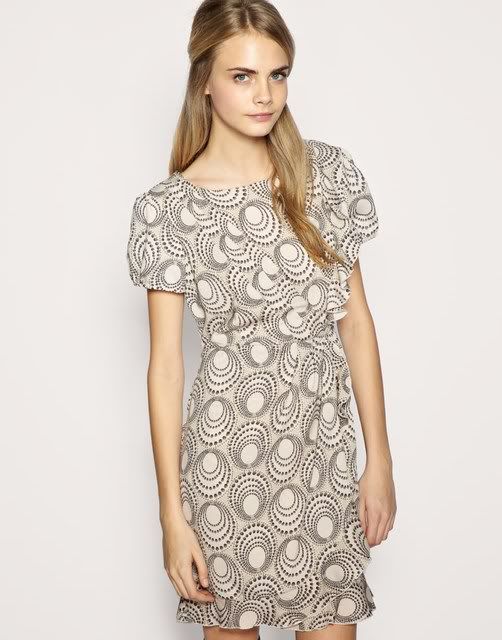
or this A Wear dress that wins complements everytime I wear it (ASOS)


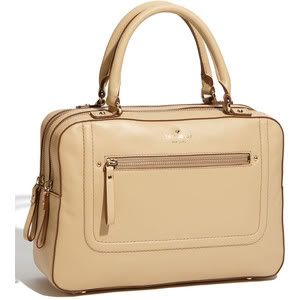
or this lovely Kate Spade bag (Nordstrom)


All the above etailers ship to Australia. But even if an e-store doesn't offer international shipping, we can use one of the many parcel forwarding services available to get our hands on what we want.

Niche markets (retro, vintage, goth, you name it) are well serviced by etailers such as Modcloth and Mame Clothing.

Online shopping is especially great for those living in regional areas, who can now shop for brands and products available in capital cities and beyond.

One size does not fit all

It's not just about brands and designers, it's also about size and fit.

I once went with my MIL to the plus size section at Myer and the options suitable for young people were few and far between. Now there area a myriad of websites catering for that market (Dream Diva locally and Baby Phat Plus Size internationally for starters).

I was completely uninspired by the "fashion" available during my pregnancy. They were either matronly, or overly expensive, or both. If only I knew about ASOS's maternity range back then. I could have been a more stylish mum-to-be!

The internet also brings Australian shoppers access to different fit options such as shoe widths and pants lengths that are traditionally unavailable here.

Custom made

To me, one of the best things about shopping on the internet is getting in touch with independent designers directly.

Websites like Etsy and Madeit are in effect global arts and crafts markets, providing fantastic reach to both designers and shoppers. I've purchase items from Etsy sellers in the US, Canada, France and right here in Australia. The service I received from the sellers have been exemplary without fail - the passion for their creations really shone through. In a few cases I was able to purchase items that were either made to my specification, or were designed with my input. It would have been next to impossible to do this before the internet without paying prohibitive prices for the privilege.

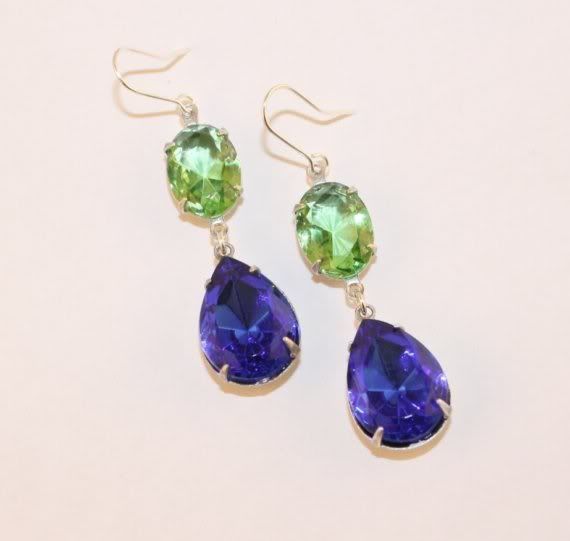
The seller named these earrings after me!


I gave the seller an idea and she came up with a design way beyond my expectation.


So even if the Australian dollar devalues by 50% against the US dollar and the British pound tomorrow, we are not going to stop shopping online, because now that we know what we can get our hands on with a few clicks of the mouse/trackpad, there's no turning back.

10 January 2012

Two dresses

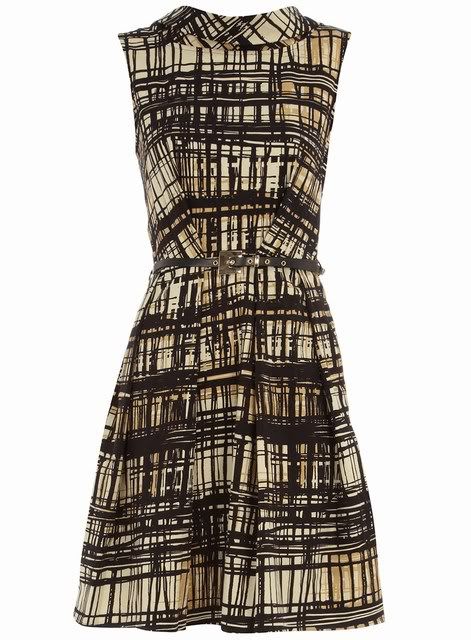
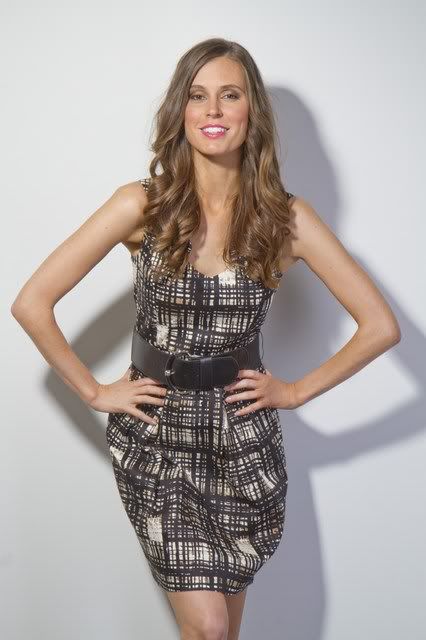
I came across these two dresses with very similar prints.


One is from a UK based retailer, and the other is from an Aussie chain. Both are "click-and-mortar" retailers. i.e. they sell online and in stores.

The Aussie brand dress is $89.95 (50% off RRP) and the UK brand dress is heavily discounted from £50 to £17 (around $A25).

Can you guess which one is which? Bonus brownie points if you can name the brands.

And more importantly, which one should I buy?

---

OK it's reveal time! The dress at the top is from Dorothy Perkins, a UK retailer with a wide range of products online. The dress on the bottom is from Events.

To me, this "dress-off" highlights the challenges for Australian brands. We can now access similar products overseas at a substantially lower price. Note that the Events dress at 50% is still more expensive than the Dorothy Perkins dress at full price (£50 = ~$A75).

That being said, both Sydney Shop Girl and The Duke prefer the Events dress, so maybe I should drop by tomorrow lunchtime to have a look-see?

8 January 2012

Santa has been good to us shoppers

The last month has been a great one for shoppers. With sales struggling, retailers have pulled out all the stops to increase traffic to the stores. I cannot remember a year with such aggressive pre-Christmas offers. For instance, Myer has hampers and Christmas trims on sale (30% and 40% respectively) the week before Christmas, and brought forward its “Boxing Day” sale to Christmas Eve. And “50% off” and “future reductions” signs are hanging on a huge number of shopfronts in the Boxing Day sales.

Unfortunately for brick and mortar stores, the march of etailers continues unabated over the holiday season. In the US, online sales from 1 November - 26 December 2011 grew 15% from the same time last year, compared to overall retail sales growth of 3.8%.

And the picture is similar in Australia. One research showed offline retail spend was down 2% for the first 15 days of December 2011 compared to the year before, but online retail spend went up by 16%. On some days, 10% of spending on credit and debit cards are with online stores.

Statistics are good and all (and I'm a numbers nerd) but what do they mean in real life? Let’s have a look at The Royal Household's Christmas gift purchases and see if they match with current trends.

I bought The Duke a diving with shark experience at Manly Oceanworld via their website after researching for online (the search was "last minute gift ideas" - I left it a bit late).

Photo: Manly Oceanworld

I also bought him a trilby hat from the Strand Hatter in Sydney which I found via Google. If I came up with the idea earlier I may have purchased it online*. Will The Duke look as hot as Matt Bomer in the trilby?

 Photo: @WhiteCollarUSA

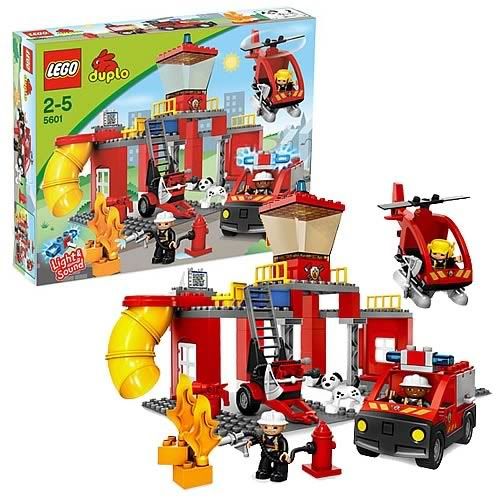
The Little Prince (TLP) is obsessed with fire trucks, and The Duke had wanted to get him a Duplo fire station set for a long time. However the product is not available anywhere in Australia, so he ordered one from Amazon.com. Even with the exorbitant postage cost ($US50!!!), it was only $A20 more expensive than the RRP of comparable Duplo sets available in Australia.


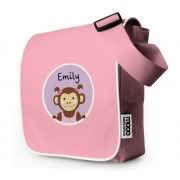
I also bought a personalised messenger bag from Mooo for my niece.


The Duke bought me lessons for riding a bike** along with an offer to buy me a bike afterwards. He didn't buy the lesson from an online store but he found the company by online research and he booked it via e-mail and paid for it by bank transfer, so it's an online purchase in my book.

Overall, more than half of our Christmas gift dollars were spent online.

And even with the big sales going on at the malls, the majority of my post-Christmas discretionary purchases were online too. Some may say I'm researching for The Etail Queen***. If only they were tax deductible!

Did you contribute to the growth of online Christmas shopping at the expense of visiting the stores? Did you want to avoid the crowd or were you attracted by the variety of gifts available online?

* The hat I bought The Duke was a tad too big, and I'm grateful that I can take him to the store to exchange for one in the right size. If I bought it online there'll be more hassles.

** Yes I don't know how to ride a bike :-( My parents didn't let us learn when we were young. I'm looking forward to the lesson so we can go for family bike rides (TLP has a royal seat at the back of The Duke's bike).

*** Of course you'll get to read about my purchases!